
Against the backdrop of accelerating global energy transition, solar photovoltaic (PV) power generation, with its core advantages of cleanliness and renewability, has become a key pillar in the development of the new energy industry. As the core unit of PV power generation systems, the quality of PV modules directly determines the power generation efficiency, safety and stability, and full-lifecycle benefits of power plants. In this context, EL (Electroluminescence) inspection technology has emerged. With its unique ability to "see through" internal defects of modules, it has become an indispensable key link in the quality control system of the PV industry, and is hailed as the "piercing eye" guarding the high-quality development of the PV industry.
The core principle of EL inspection technology is based on the electroluminescent characteristics of crystalline silicon. When a forward bias voltage is applied to a PV module, electrons and holes inside the module will release near-infrared light with a wavelength of 1000-1100 nanometers during the recombination process. Healthy solar cell areas emit light uniformly with consistent brightness, while areas with defects such as microcracks, grid breaks, cold soldering, and black-hearted cells will experience significantly reduced luminous intensity due to hindered carrier recombination, forming clear dark spots or dark lines. By capturing these weak light signals with a high-resolution infrared camera and analyzing them with professional image processing algorithms, internal defects invisible to the naked eye can be converted into visual inspection images, enabling accurate evaluation of PV module quality. A complete EL inspection system usually consists of three core modules: a programmable constant current power supply system, a high-sensitivity infrared imaging system, and an intelligent image processing system. These modules work together to ensure the accuracy and reliability of inspection. Currently, the pixel-level inspection accuracy of mainstream equipment can reach 0.03 millimeters, capable of identifying more than 14 types of module defects.
The application value of EL inspection technology runs through the entire lifecycle of PV modules, forming a comprehensive quality control closed loop from manufacturing to power plant operation and maintenance. In the manufacturing process, EL inspection can be used in key links such as silicon wafer microcrack screening, string soldering process quality sampling inspection, and finished module factory inspection, effectively preventing defective products from entering the market. Data shows that after introducing EL inspection, the factory defect rate of module manufacturers can be reduced by more than 37%. A leading module manufacturer used EL inspection technology to reduce the microcrack detection rate before lamination from 12% to 3%, increase the finished product A-rate to 99.5%, and save more than 5 million yuan in rework costs annually. In the power plant construction and operation and maintenance phase, EL inspection also plays a key role: the arrival inspection phase can identify module damage caused during transportation, the post-installation inspection can confirm whether installation operations have caused module damage, and regular inspections can timely detect defects such as microcracks and hot spots caused by environmental factors during operation. Practice has proven that regular EL inspections can increase power plant efficiency by 8%-12%. In the operation and maintenance case of a 50MW power plant in Northwest China, EL inspection completed the inspection of 200,000 modules in the entire station in only 2 weeks, identifying 1,200 microcracked modules and avoiding potential hot spot losses of about 800,000 yuan per year.
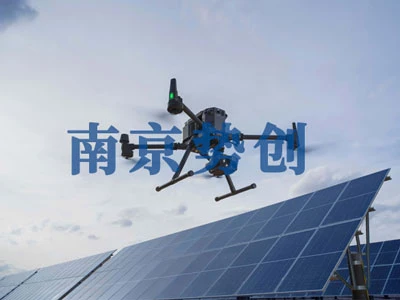
With the continuous iteration and upgrading of PV industry technology, EL inspection technology is also developing innovatively, showing distinct trends of intelligence, integration, and portability. In terms of intelligence, AI deep learning algorithms are widely used in defect identification, enabling automatic classification and accurate determination of various defects, reducing the false detection rate to below 0.1% and increasing the recognition rate to above 99.5%. At the same time, combined with IoT technology, it realizes cloud storage and remote analysis of inspection data, and can automatically generate quality inspection reports including 14 parameters such as defect thermal maps and area ratios, greatly improving inspection efficiency and data analysis depth. In terms of integration, multi-parameter integrated inspection has become a new direction. Combining EL inspection with IV curve testing, infrared thermal imaging and other technologies, it realizes an integrated solution of "defect detection + power attenuation cause analysis", further improving the accuracy of fault diagnosis. In terms of portability, modern portable EL inspection equipment has a weight reduced to 5-15 kilograms, supporting three inspection modes: handheld, mounted, and UAV-mounted, which can adapt to the inspection needs of various complex environments such as rooftop distributed power plants and desert centralized power plants, greatly expanding the application scenarios.
The continuous improvement of industry standards provides strong guarantee for the standardized application of EL inspection technology. China has issued a number of standards such as NB/T 11080-2023 "Technical Specification for Electroluminescence (EL) Inspection of Photovoltaic Modules" and T/ZJSEE 0010-2023 "Electroluminescence (EL) Inspection and Defect Determination Method for Crystalline Silicon Modules of Photovoltaic Power Plants", which clearly define the equipment requirements, operation procedures, defect determination criteria and result evaluation methods of EL inspection, promoting EL inspection from spontaneous industry application to standardized development track. At the same time, the global PV inspection market scale continues to expand. The global PV inspection market reached about 1.5 billion US dollars in 2023, and is expected to grow to nearly 2.2 billion US dollars by 2025, with a compound annual growth rate of nearly 12%. As a core segment, EL inspection will usher in broader development space.
Looking forward to the future, with the continuous popularization of new PV module technologies such as PERC, TOPCon, and HJT, and the continuous improvement of global requirements for PV product quality, EL inspection technology will face higher technical challenges and greater innovation opportunities. On the one hand, inspection equipment will develop towards higher precision, faster inspection speed, and lower cost, further reducing the application threshold for small and medium-sized enterprises; on the other hand, intelligent inspection systems will realize in-depth integration with PV power plant operation and maintenance management systems, building a full-chain quality traceability system from component production to power plant operation and maintenance. As the core technical support for PV industry quality control, EL inspection will continue to guard the high-quality development of the PV industry and help the smooth realization of global energy transition goals.
contact
Be the first to know about our new product launches, latest blog posts and more. Nanjing Vision Potential Intelligent Technology Co.,Ltd.Established based on the Nanjing Xiangning Artificial Intelligence Research Institute, we have brought together a number of outstanding industry... Any question or request?
Click below, we’ll be happy to assist. contact